


When Oleksii Makeiev arrived in Berlin, he placed a flip chart in his office displaying photographs of Bundeswehr military equipment under the heading Wunschliste (“wish list”). Today, nearly every image bears a checkmark.
The ambassador recalls that in the autumn of 2022, shortly after taking up his post in Berlin, he unexpectedly received an envelope from Germany’s Ministry of Defense containing promotional brochures featuring equipment in service with the Bundeswehr.
“I called the ministry and asked, ‘Did you send these so I could choose what we need?’ They just laughed,” Makeiev recalls.
Using the catalog as a reference, he created his own Wunschliste, gradually ticking off each item as Ukraine received the corresponding weapons systems from Germany.
Much of what seemed highly unlikely in 2022 has since become reality. Today, Germany is Ukraine’s largest European provider of military assistance.
As Makeiev points out, defense relations between Ukraine and Germany are no longer defined by a donor-recipient dynamic. The partnership has evolved beyond arms deliveries into a strategic alliance that includes the joint production of drones, long-range strike systems, air defense interceptors, and next-generation missile projects.
In an interview with Ukrinform’s Berlin correspondent, the Ukrainian ambassador discussed Germany’s evolving approach to supporting Ukraine, whether Berlin still has any remaining “red lines,” progress in joint defense production, preparations for a framework Drone Deal, cooperation on air defense and long-range weapons, Ukraine’s prospects for EU and NATO membership, and the embassy’s work with the Ukrainian community in Germany.
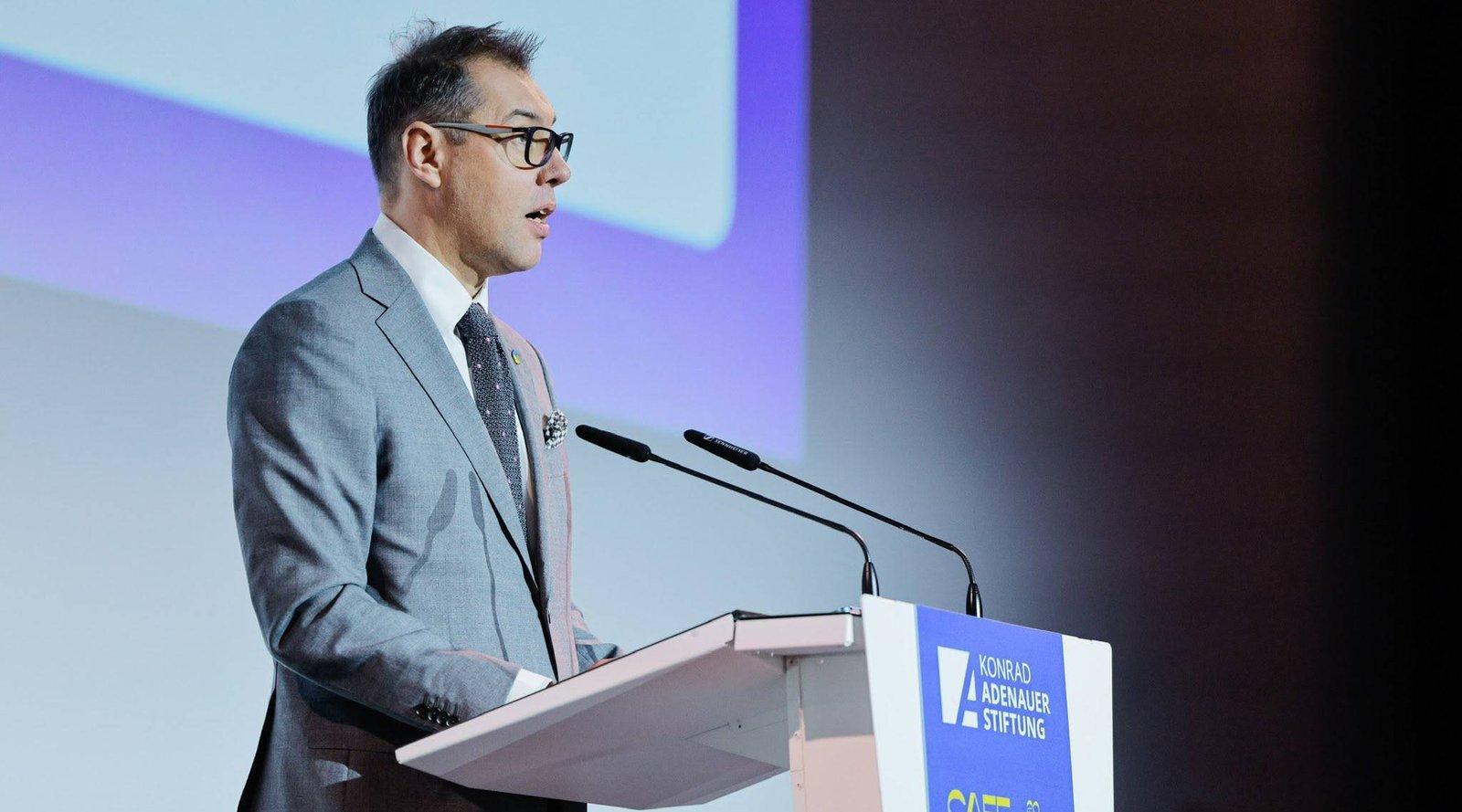
BERLIN HAS OVERCOME ITS OWN “RED LINES,” BUT FEARS OF “ESCALATION” STILL LINGER
Ukrinform (UI): Mr. Ambassador, you arrived in Berlin at the outset of the so-called Zeitenwende (“turning point”), when every decision on Ukraine was shaped by debates over escalation, historical responsibility, and fears of provoking the Kremlin. Today, Germany is one of Ukraine’s closest allies and Europe’s largest provider of military assistance. You witnessed this transformation from the inside and, evidently, played an active role in it. What was the main driving force behind this shift?
Oleksii Makeiev (OM): There have been several driving forces.
The most important is the Ukrainian soldier. Ukrainians in uniform are writing Europe’s history today—and shaping its future.
When Germans see the Armed Forces of Ukraine defending democracy, independence, and peace not only for Ukraine but for Europe as a whole, and when they witness the resilience of Ukrainian society, I believe that has become the single most important factor in transforming perceptions of Ukraine.
The second key factor has been our ability—and Germany’s willingness—to build strong bilateral ties. In diplomacy, success comes when the entire state speaks with one voice.
Today, we have established excellent direct relations between President Zelensky and Federal Chancellor Merz, as well as between President Zelensky and Federal President Steinmeier. They speak by phone, exchange messages, and remain in regular contact. In various international formats, Foreign Minister Sybiha meets with Foreign Minister Wadephul, Deputy Prime Minister Fedorov with Defense Minister Pistorius, while our finance, economy and energy, and health ministers maintain close working relationships with their German counterparts.
In other words, we have established direct channels of communication at every level.
This April, we signed the Declaration on the Strategic Partnership between Ukraine and Germany. We also held a new round of bilateral intergovernmental consultations for the first time in 22 years. Germany reserves this format of cooperation for only its closest and most important partners.
That is why calling our relationship a strategic partnership is far more than a slogan or a public relations exercise. It is a forward-looking document that defines the future character of our bilateral relations.
So, the key drivers have been the Armed Forces of Ukraine, together with our foreign policy and diplomacy under the President’s leadership and the active involvement of all the relevant ministries.
The third factor, I believe, has been journalists.
Germany remains a country where newspapers are widely read—not only national dailies but local publications as well. Television continues to command a large audience, and public broadcasters play an enormous role. Against that backdrop, it is particularly important that many German correspondents are permanently based in Ukraine.
During my three and a half years here, there has not been a single day when Ukraine was absent from the German media. Nor has there probably been a single week in which I, as ambassador, did not give an interview to a German media outlet.
Thanks to the work of journalists, Ukraine remains part of Germany’s daily public conversation—whether over breakfast with the morning newspaper, on the morning news, or during the evening political talk shows, which are immensely popular here and continue to shape public debate for days afterward.
UI: Does Berlin still have any “red lines” when it comes to supporting Ukraine—limits that you still have to overcome on the diplomatic front?
OM: You know, for a long time, German politicians were the ones drawing these “red lines” for themselves.
We all remember the arguments: “No, we can’t have a German tank firing at a Russian one. No, we can’t have a German shell landing on Russian territory. No, the equipment we provide must not cross the border.”
In countless public appearances and discussions with decision-makers, I kept making the same point: stop drawing red lines for yourselves or around yourselves. Draw them in front of Russia.
I believe those self-imposed “red lines” have now disappeared.
But, of course, the fear remains.
The defining buzzword in Germany over the past few years has been “escalation.”
Everyone seems to be afraid of another escalation by Russia.
Our response is straightforward: What escalation is it that you still fear? What is it that Russia has not already done to us, to Ukrainians? We are no longer afraid of escalation. Russia has already done everything it possibly could. It is time to stop being intimidated by these threats.
And Ukrainians themselves are demonstrating how Moscow’s threats should be confronted.
At the same time, it is important to understand that Germany is a country of debate and deliberation. Decisions are not made overnight. Every major decision must be thoroughly discussed by those who formulate it, those who make it, and those who are responsible for communicating it.
That is why we have to approach our work here as a long-distance race—perhaps even a marathon—rather than a sprint.
GERMANY’S LEADERS ARE NOW SPEAKING ABOUT THEIR RESPONSIBILITY TOWARD UKRAINE
UI: For decades, Russian propaganda exploited Germany’s sense of historical guilt by directing it exclusively toward Moscow. Has that perspective begun to change?
OM: That is precisely the marathon we began running in 2023.
Our embassy team devoted a great deal of thought to how best to approach this issue.
At the end of 2022, Germany recognized the Holodomor as a genocide. That laid the first brick in the foundation we have been building around the concept of Germany’s historical responsibility.
It is also worth recalling that, beginning in 2023, the German authorities stopped allowing Russia’s annual commemorative gatherings around Soviet war memorials on May 8–9.
I also decided that we would no longer lay flowers at monuments bearing Stalin’s quotations and the inscription “1941–1945.” Instead, together with representatives of the German government and the Mayor of Berlin, we would pay our respects at the Neue Wache memorial, dedicated to the victims of war and tyranny. That has now become a tradition.
At the same time, we have been working systematically to ensure that Germany’s government, president, and parliament speak more openly about Germany’s responsibility toward Ukraine and the need to support it today in light of Germany’s actions during the Second World War.
And we are already hearing that message from the Federal President, the President of the Bundestag, and the Federal Chancellor in their public statements.
Changing deeply entrenched narratives—first promoted by the Soviet Union and later by Russia here in Germany—is painstaking, long-term work. My goal is to ensure that there is both an understanding and a willingness within the German Bundestag to reassess Germany’s responsibility for the crimes of the Second World War.
UI: That brings me to the recent cover of Der Spiegel, which referred to Nazi Germany’s war against Russia rather than against the Soviet Union. You responded to it publicly. In your view, was this simply an editorial oversight, an error, or does it reflect a historical misconception that still persists among many Germans?
OM: You know, that cover sparked an enormous debate, including among historians and other experts. The article itself, however, is excellent. It explains what happened, criticizes Moscow’s attempts to distort history, and exposes the false narratives Russia continues to promote.
The problem lies in a deeply ingrained way of thinking: people say “Russia” when they mean “the Soviet Union,” and “Russian” instead of “Soviet.” Even at the linguistic level, those concepts have become interchangeable for many.
Unfortunately, these are precisely the entrenched narratives we have to challenge and dismantle. At the same time, I believe the reaction of German society to that headline was very encouraging.
For Ukrinform’s readers, however, it is worth noting that the subheading did, in fact, refer to the Soviet Union. It was only the main headline, printed in large type, that read: “Our War Against Russia.”
I would very much like to see a future cover of Der Spiegel bearing the headline: “Russia’s War Against Us.” I sincerely hope that day comes soon.
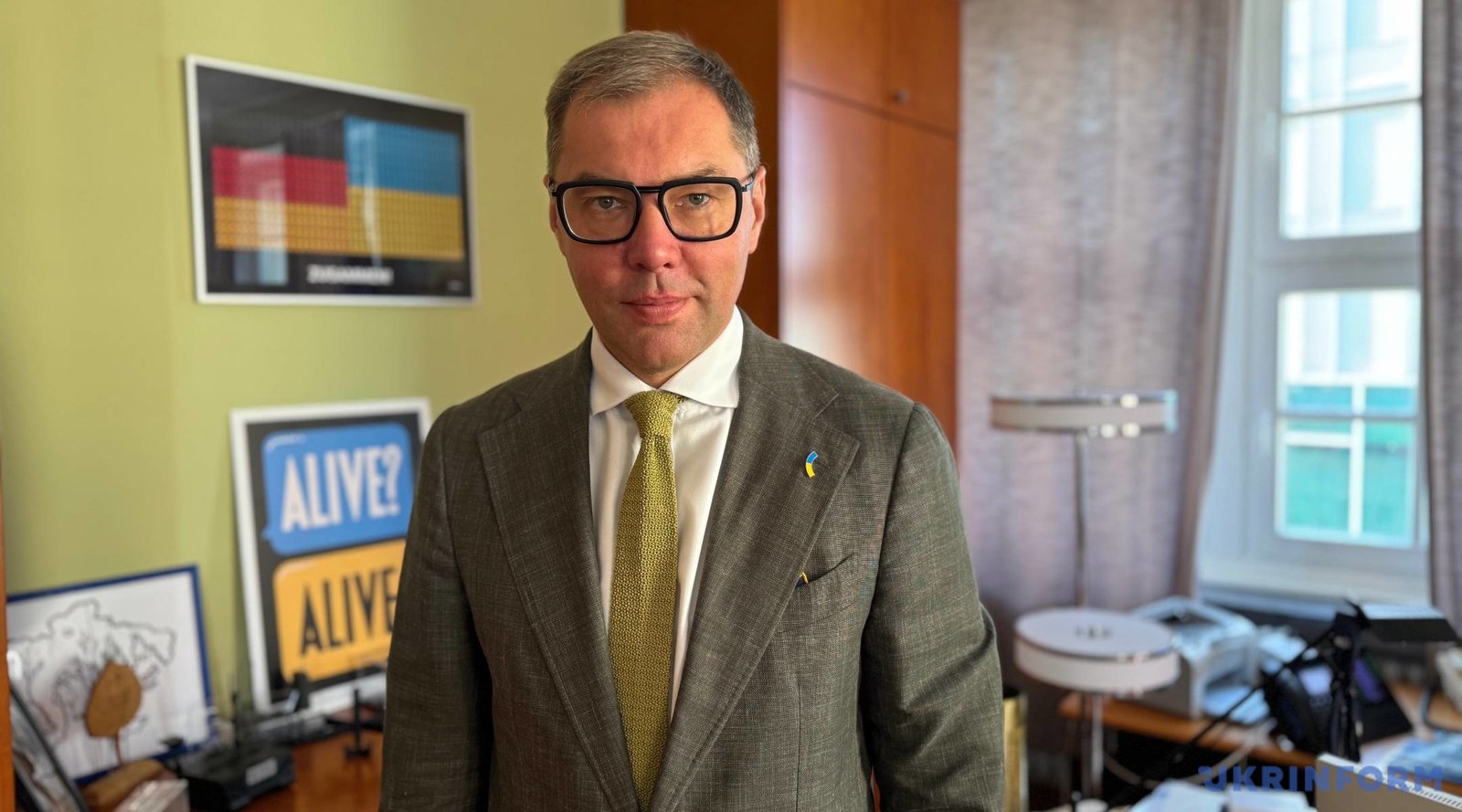
THE HARDEST THING FOR GERMANS TO UNDERSTAND IS THAT RUSSIA’S WAR IS ALSO BEING WAGED AGAINST GERMANY ITSELF
UI: Speaking of myths and the evolution of Germans’ perceptions of Ukraine since 2022, which misconception has proven the most difficult to dispel? What do Germans still not fully understand about this war?
OM: The hardest thing for Germans to grasp is that Russia’s war is not only against Ukraine—it is a war against all of Europe, including Germany itself.
Part of my job here is to explain that Russia is already killing people in the heart of Berlin, carrying out acts of sabotage, flying drones over German military bases and industrial facilities, and possesses missiles capable of striking anywhere in the country.
The more Germans recognize this reality, the more they will understand that the Russian threat is not abstract—it is directed at them as well.
I frequently visit German defense companies, and I have noticed that only a handful have switched to operating two or three shifts. During a recent visit to Saarland with Federal President Steinmeier, we toured a Villeroy & Boch ceramics factory. We were shown the production line and told that the company manufactures sinks and toilets around the clock because its furnaces cannot be shut down.
I asked our German hosts: How is it that you manufacture sanitary ware 24 hours a day, seven days a week, but produce weapons only 40 hours a week?
Changing this mindset—stepping out of the comfort zone and embracing what Defense Minister Pistorius has called for, namely being prepared for war—is the central challenge.
As Chancellor Merz candidly acknowledged, Germany is no longer at peace, even though it is not formally at war.
JOINT PRODUCTION OF LONG-RANGE WEAPONS IS FULLY ALIGNED WITH GERMANY’S OWN INTERESTS
UI: Ukrainian President Volodymyr Zelensky recently said that Ukraine is conducting a “carefully calculated operation” in Crimea and that “if Ukraine receives what we discussed with our partners at the G7—and that depends on our partners’ decisions—we will quickly create the conditions under which Russia will be forced to choose peace.” Presumably, those expectations are also directed at Germany. Do you sense a greater willingness in Berlin today to make decisions that, just a year ago, would have been considered too sensitive because of concerns about escalation?
OM: Those decisions are already being made.
If you look at how Germany’s policy has evolved since 2022, the figures speak for themselves.
Back in 2022, Germany’s assistance to Ukraine amounted to just a few hundred million euros. Today, the federal budget for 2026 and the draft budget for 2027 allocate €11.5 billion to support Ukraine—equivalent to roughly 0.25% of Germany’s GDP.
Those are enormous sums—and they are earmarked for military assistance alone.
Back then, the discussion revolved around five thousand helmets. Today, Germany is Europe’s leading provider of military support to Ukraine.
Day after day, month after month, Germany provides exactly what we need—from missiles for our air defense systems to direct funding for individual military units, procurement of long-range strike systems from Ukrainian manufacturers, and joint weapons production.
We have now reached the stage where more than ten Ukrainian-German joint ventures are being established in the defense sector, covering the production of both long-range weapons and interceptor missiles for air defense systems.
UI: Returning to the President’s statement, what exactly was he referring to?
OM: He was referring to the fact that, together with our partners—including Germany—we will jointly produce air defense systems and long-range missiles.
UI: Is there any particular decision you are still hoping to see from Berlin?
OM: As ambassador, I do not have personal wishes. I am guided solely by the needs of our country.
We have now reached precisely the stage I had long hoped for: Ukrainian and German companies are beginning to jointly manufacture the weapons that, as the President has said, will make a significant contribution to compelling Russia to return to the negotiating table and restore peace.
I believe we have succeeded in convincing the world that Russia must be dealt with from a position of strength, not weakness.
And strength is built not only at the negotiating table. It also rests on military capability and, of course, credible deterrence.
That is fully in Germany’s own interest as well: to possess effective deterrent capabilities—including long-range strike systems and cruise or ballistic missiles—that can deter the Russian threat to Europe as a whole.
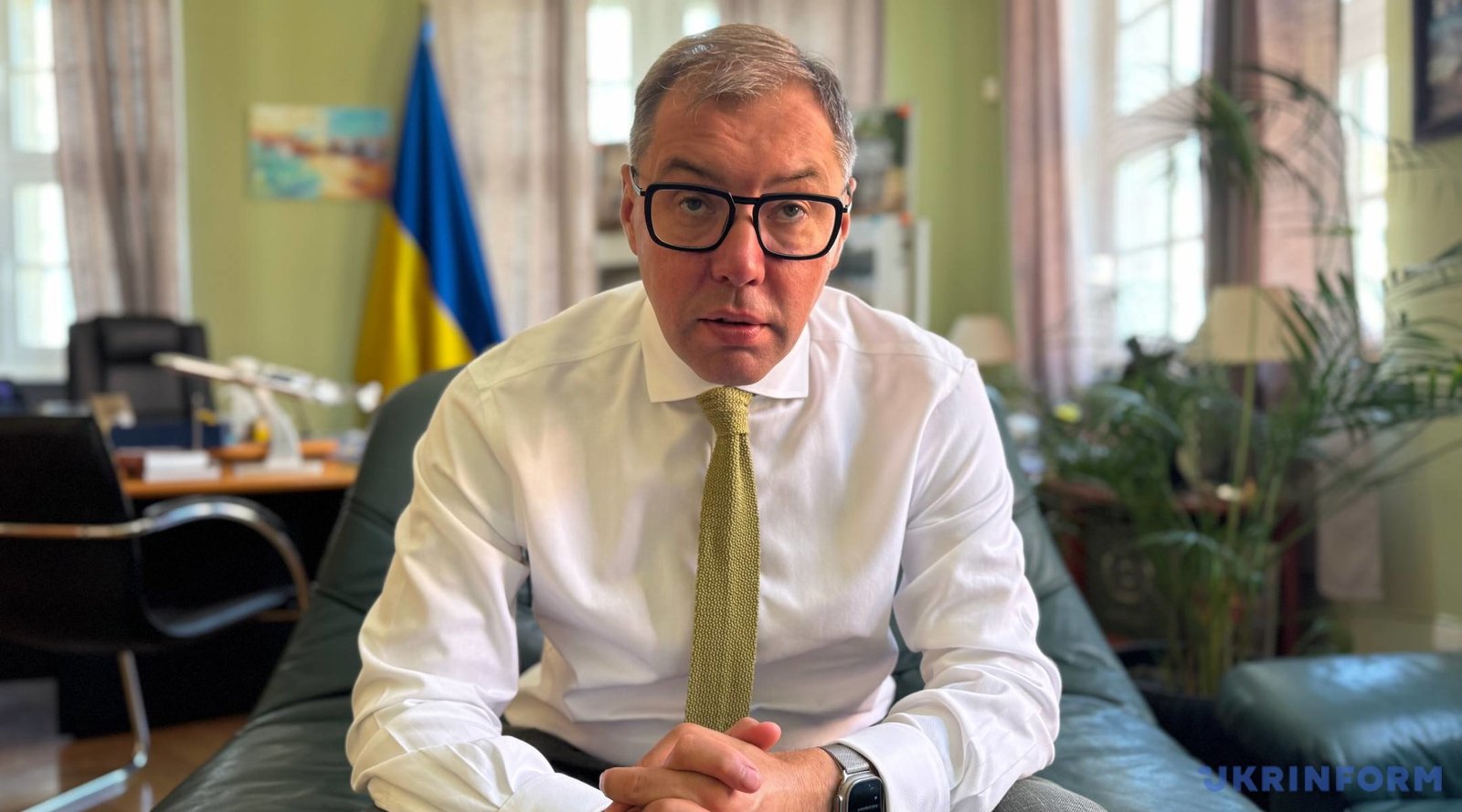
WE WILL MOVE VERY QUICKLY: GERMANY AND UKRAINE ARE PREPARING A “DRONE DEAL”
UI: As I understand it, this includes, among other things, the promising missile cooperation project involving Fire Point. It was recently reported that Germany’s Diehl Defence is considering joint production of the Flamingo cruise missile. Could you tell us more about this area of cooperation?
OM: I would rather not go into the specifics of individual projects. What I can say is that Ukraine’s leading companies in missile technology—both long-range strike systems and interceptor missiles—are now establishing joint ventures with German partners.
You mentioned Diehl Defence. There is also MBDA, the manufacturer of the Taurus missile, which will soon begin licensed production of interceptor missiles for the Patriot air defense system. The company recently signed a memorandum of understanding with Ukraine’s Luch Design Bureau on the joint development of long-range weapons.
In other words, Ukrainian and German defense companies are forging partnerships at a remarkable pace.
At the same time, following the President’s initiative, we are negotiating with the German side on a so-called Drone Deal—a framework agreement that would facilitate technology sharing and joint production not only for Ukraine but also for Germany and other partner countries.
UI: At what stage are the negotiations on the Drone Deal with Germany?
OM: The negotiating teams are currently working on the text. I believe we will move forward very quickly.
EUROPE STILL LACKS AN INDIGENOUS BALLISTIC MISSILE DEFENSE SYSTEM—WE ARE DEVELOPING ONE WITH GERMANY FOR THE BENEFIT OF ALL OF EUROPE
UI: Germany has become Europe’s leading contributor to the defense of Ukraine’s skies, supplying its own air defense systems and missiles while coordinating support from other partners. That cooperation is now evolving into a genuine partnership, including plans to jointly develop a new air defense system capable of intercepting ballistic missiles. The relevant agreement was recently signed by the defense ministers of Ukraine and Germany. Could you tell us more about the prospects for this project?
OM: Naturally, the companies themselves should discuss the technical details. They are the ones developing the technologies, manufacturing the individual components, and integrating them into a complete system.
What we are seeing is that the President and the entire team are focused on bringing together the right manufacturers.
After all, a ballistic missile defense system is far more than just an interceptor missile. It also requires propulsion, guidance systems, radars, and the integration of all these elements into a single, effective capability.
Germany essentially has all the key technologies needed for such a system: Hensoldt’s advanced radar technology, MBDA’s missile expertise, and seeker heads developed by Diehl Defence.
So why has Germany embraced Ukraine’s proposal? Because we are making it clear that this is not simply a project for Ukraine—it is a project for the whole of Europe.
Today, Europe has no indigenous ballistic missile defense system. Germany has procured Israel’s Arrow system and also operates Patriot, but a purely European capability of this kind does not yet exist.
UI: As I understand it, the agreement signed by the two defense ministers concerns the prospective FREYA air defense system. Earlier this month, Germany’s Hensoldt and Ukraine’s Fire Point signed a memorandum of understanding on integrating components for this future ballistic missile defense system. Is that correct?
OM: I’d rather not say at this stage whether it specifically concerns FREYA or not, because that is only one of several projects currently under development. What the system will ultimately be called and which companies will participate are separate questions.
What matters most to me as ambassador is that Ukrainian and German companies are now engaged in direct dialogue. They are identifying areas of mutual interest and working together to develop next-generation defense technologies.
My role is to help facilitate that process.
I remain in constant contact with the leadership of both Ukrainian and German companies. But they are the ones who will ultimately design, develop, and manufacture the product.
UI: President Volodymyr Zelensky has also spoken about securing a U.S. license to manufacture Patriot missiles—either in Ukraine or elsewhere in Europe. Germany already has production facilities and the necessary expertise. Is it our principal technological partner in this effort?
OM: The underlying technology is, of course, American.
What we are discussing is the possibility of manufacturing under a U.S. license and the transfer of the relevant technologies.
Germany’s MBDA, for example, already holds the necessary production license. That is precisely why, during the bilateral intergovernmental consultations in April, we reached agreements with the German side on the supply of a substantial number of these missiles, as well as on the possibility of joint production.
As for whose production line it will be and where it will ultimately be located, it is still too early to discuss those details.
THE GERMAN GOVERNMENT MUST SEND A CLEAR MESSAGE TO COMPANIES THAT HAVE CHOSEN TO WAIT OUT THE WAR IN RUSSIA: IT IS TIME TO LEAVE
UI: You spent many years working on sanctions policy. The European Union has now adopted more than twenty sanctions packages against Russia. Yet Western-made components—including German ones—continue to be found in Russian missiles and drones. Why have these loopholes allowing gray-market imports still not been closed?
OM: Because this is an extremely complex process.
In reality, systematic controls over these components only began to take shape after the start of Russia’s full-scale invasion.
The challenge is that many of them are not subject to export controls at all. In many cases, they are simply commercially available electronic components.
Our sanctions coordinators remain in constant contact. Whenever a component is identified, we immediately determine its origin and manufacturer.
We also engage directly with the companies involved, urging them to strengthen oversight of their supply chains and shut down these procurement routes. Some companies respond quite quickly.
We know that Russia has developed an extensive sanctions-evasion network operating through third countries. This issue therefore remains a standing item on the agenda of our consultations at the foreign ministry level.
We provide our German counterparts with specific cases, and, at Ukraine’s request, the German side raises these issues with the third countries through which such components may be reaching Russia.
Naturally, much of this work takes place behind closed doors.
But there is a clear understanding of how to build a Europe-wide system for monitoring the supply of these components. This is a joint effort involving Ukraine, Germany, and the European Union.
UI: More broadly, sanctions are clearly having an impact. But which restrictive measures would hurt Russia the most? What would it take to force Moscow to end its aggression?
OM: Sanctions alone will not bring this war to an end.
At the same time, we can see how slowly the European Union is moving toward a complete phase-out of Russian energy imports—both oil and natural gas.
Germany deserves credit in this regard. In 2022, it stopped purchasing Russian gas and oil.
UI: Although Russia itself cut off the gas supplies…
OM: Yes, but Germany made a political decision. It said, “We will rebuild our energy supply system.” And that is exactly what it did.
Unfortunately, the full potential of financial sanctions has yet to be realized.
Not all Russian banks have been cut off from the international financial system.
I also call on the German government to send a clear message to those German companies that have chosen to wait out the situation in Russia while continuing to pay taxes there: leave Russia.
CHANCELLOR MERZ IS SEEKING WAYS TO ENSURE THAT EUROPE HAS A SEAT AT THE NEGOTIATING TABLE ALONGSIDE UKRAINE
UI: In recent months, we have seen much closer coordination among Germany, France, and the United Kingdom within the E3 format. It appears that this grouping is gradually becoming the core of Europe’s support for Ukraine, assuming the role of the principal coordinator—and perhaps even a future guarantor—of a peace process…
OM: What has changed since Germany’s new government took office? Above all, Chancellor Merz has assumed a leadership role on many key issues.
Just before the meeting in Anchorage, he convened the Coalition of the Willing. President Zelensky traveled to Berlin at short notice to meet with Chancellor Merz. Together, they held a video conference with other leaders, including President Trump. Following the Anchorage meeting, this group of European leaders traveled to Washington.
The Chancellor is now working closely with the British Prime Minister and the French President. He is looking for ways to ensure that Europe has a seat at the negotiating table.
That is fully in line with Ukraine’s interests.
We have always maintained that Europe should be represented alongside us during any negotiations.
Just a few days ago, Berlin also hosted a meeting of the European Five, bringing together Germany, France, the United Kingdom, Poland, and Italy.
This issue is now being actively discussed within the European Union. No concrete decisions have been made yet, but the fact that the discussion is taking place is, in itself, highly significant.
It is equally important to me that both the Federal Chancellor and Germany’s Foreign Minister remain fully committed to supporting Ukraine by every possible means, including within any future negotiating formats.
UI: Is the question of European representation in a future negotiating process currently being discussed within German political circles?
OM: I don’t think anyone is discussing specific names at this stage.
The focus is rather on finding a form of European participation that would be acceptable to both the member states of the European Union and NATO.
So, for the time being, the discussion is about the format—not the individuals.
UKRAINE IS THE ONLY COUNTRY EFFECTIVELY FULFILLING ARTICLE 5 OBLIGATIONS WITHOUT BEING A MEMBER OF THE ALLIANCE
UI: Turning to the European Union, Chancellor Merz recently proposed accelerating Ukraine’s EU integration through what was widely reported as “associate membership.” How do you assess that proposal?
OM: I think his position was not interpreted entirely accurately.
He was not proposing associate membership. Rather, he was advocating accelerating Ukraine’s accession process by opening all of the negotiating clusters. Chancellor Merz made it clear that his objective is to open every cluster, with Ukraine’s full membership in the European Union as the ultimate goal.
The document that was leaked to the press sparked considerable debate.
We also made it clear to our German partners that we do not support the very concept of “associate membership.” In Ukraine, there is concern that such a status could become a permanent endpoint rather than a stepping stone. After all, we already have an Association Agreement with the European Union.
At the same time, it is important that the document sparked a broad discussion.
It is equally important that we have already opened the first negotiating cluster and are now working to open all the remaining ones.
As on so many other occasions, Germany did not stand aside, wait, or simply criticize. Once again, it took the lead. It was this very initiative that triggered the debate we are now having within the framework of Ukraine’s EU accession process.
UI: Has Germany also assumed a leadership role on the issue of Ukraine’s NATO membership? Is that subject being discussed at all, especially with the NATO Summit approaching?
OM: As ambassador, I raise this issue at every opportunity.
The reality is that today Ukraine is the only country that is, in effect, fulfilling the obligations of Article 5 of the Washington Treaty without actually being a member of the Alliance. It is defending NATO against the greatest threat the Alliance faces—and it is doing so itself.
Of course, we do so with financial and military support from our partners. But it is Ukraine that is carrying the burden of this defense.
As is increasingly being recognized in public debate, one has to ask: Would it not be in NATO’s own interest to have Europe’s strongest army among its members—an army that has demonstrated on the battlefield its ability to contain the very threat NATO itself officially identifies as its principal adversary, namely Russia?
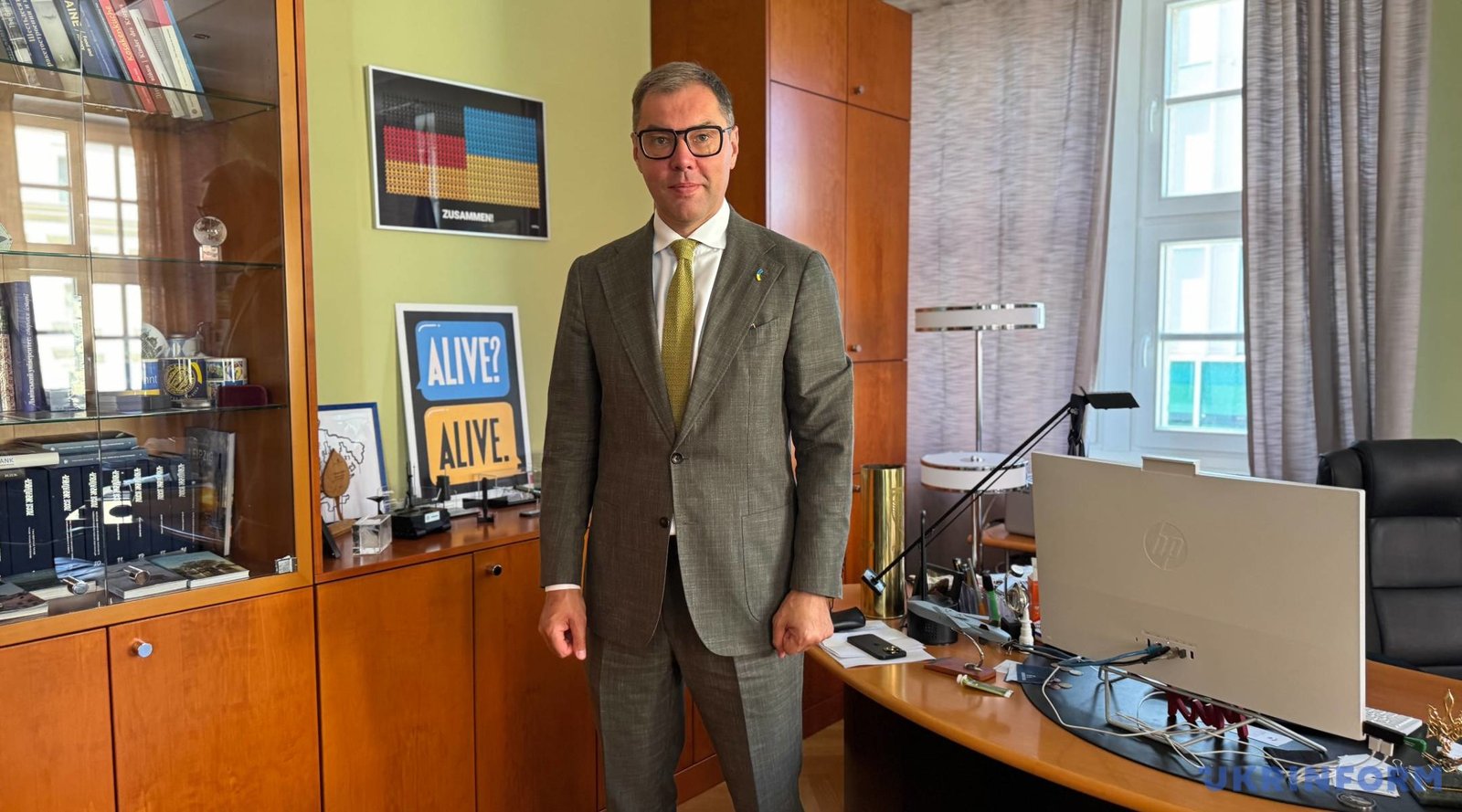
ANY NEW EUROPEAN SECURITY ARCHITECTURE WILL NECESSARILY INCLUDE UKRAINE—BUT THE MOST STRAIGHTFORWARD PATH IS RAPID ACCESSION TO NATO
UI: As things stand, however, political realities mean that Ukraine cannot quickly become either a member of the European Union or, at least in the near term, a member of NATO. Against this backdrop, the idea of a European Defense Union is being discussed with increasing frequency—a structure that would include both EU member states and non-EU countries such as the United Kingdom, Norway, and Ukraine. How do you view this concept?
OM: Serious discussions are now underway about the future of both NATO and the European Union. We can see that the United States wants its NATO allies to assume greater responsibility and to rethink their contribution to the defense of the European and transatlantic security space.
Following the established path, I believe that both the European Union and NATO would become significantly stronger with Ukraine as a member.
But if new forms of cooperation ultimately emerge, any new Euro-Atlantic security architecture will inevitably have to include Ukraine. Without Ukraine, such a system would make little sense and simply would not be viable.
UI: But is the idea of a European Defense Union actually being discussed in practical terms?
OM: I don’t have the impression that we are at the point where we can seriously talk about creating such a structure in the near future.
Yes, the idea has been put forward, largely in response to what many perceive as a declining U.S. role in Europe. But where that discussion will ultimately lead remains to be seen.
In my view, there is a much simpler solution: swiftly conclude Ukraine’s EU accession negotiations and open a fast-track path to NATO membership.
UI: But as Chancellor Merz has argued, a country at war cannot become a full member of the European Union. And that may not be Germany’s position alone…
OM: We began this conversation by talking about how deeply held assumptions in Germany evolve through long and often difficult debates.
The belief that a country cannot join either the European Union or NATO while at war is another such unwritten assumption shared by many politicians.
Yet every day we demonstrate that we are capable of bringing this war to an end and securing peace—not only for ourselves, but for Europe as a whole.
That is why we will not stop making our case. And, as is customary in Germany, we will continue engaging skeptics through open and sustained debate.
IT IS IN BOTH UKRAINE’S AND GERMANY’S INTEREST TO ENSURE THAT SKILLED UKRAINIANS ARE AVAILABLE TO HELP REBUILD THE COUNTRY
UI: I’d also like to turn to the human dimension. The Declaration on the Strategic Partnership includes provisions on coordinating the return of Ukrainians, establishing Unity Hubs, and creating working groups on return and reintegration. How will this mechanism for coordinating the return of Ukrainian citizens work?
OM: First of all, we are grateful to Germany for supporting the creation of Unity Hubs for Ukrainians. The first has already opened in central Berlin and is gradually expanding its activities.
I personally visited the center during its first days of operation. Representatives of Ukraine’s Pension Fund were there, and Ukrainian pensioners immediately formed long queues to seek advice on specific issues.
The Ukrainian state now has a visible presence here. It is expanding the range of services it can provide. Ukrainian citizens also have more opportunities to connect with one another, while Ukrainian community organizations in Germany can use these facilities as a base for their activities.
I believe this is an excellent initiative.
Our efforts to coordinate the return of Ukrainians have two components.
The first is the Unity Hub itself—that is, the Ukrainian state’s engagement with the Ukrainian community, providing information about the opportunities and services available to them.
The second is identifying ways to facilitate voluntary return together with our German partners. To that end, a joint Ukrainian-German working group has been established, bringing together the relevant government agencies to exchange information and coordinate their efforts.
We need to understand the community we are working with. Today, around 1.3 million Ukrainians live in Germany. We are seeing a significant increase in the number of those who are employed—people who are not only receiving assistance but are also paying taxes and social security contributions.
The figures are not yet comparable to those in Poland, but a large proportion of Ukrainians have already integrated into German society.
It is in both Ukraine’s and Germany’s interest to ensure that these skilled Ukrainians will be available to help rebuild Ukraine when the time comes. That is a shared objective.
UI: President Volodymyr Zelensky has also said that the return to Ukraine of military-age men who left the country illegally should be handled by the relevant authorities in both countries. What legal or administrative mechanisms are being considered?
OM: I would rather not discuss those mechanisms at this stage. They are currently being worked out within the framework of the joint working group.
UI: Turning to Ukrainian children attending German schools, what is the Ukrainian state—particularly through the embassy—doing to preserve their Ukrainian identity? And has there been progress in having Ukrainian recognized as a second foreign language in German secondary schools?
OM: In many of Germany’s federal states, Ukrainian is already offered as an elective heritage language. Much depends on the interest shown by children and their parents. Where there is sufficient demand, schools are willing to organize Ukrainian-language classes and recruit teachers.
At the same time, we are working with the educational authorities of Germany’s federal states to introduce Ukrainian as a second or third foreign language in German schools.
Students can already study Ukrainian as a second foreign language in some schools in Hesse. In Berlin, one Gymnasium will begin offering Ukrainian classes this year. Moreover, for the second consecutive year, students in Berlin have been able to take an exam in Ukrainian, with the results counting toward their school-leaving qualification as their second foreign language.
That is why I would like to appeal to all Ukrainians living in Germany: please speak Ukrainian—including with your children. It is such a simple thing to do, yet it is one of the most important steps we can take to preserve our national identity.
GERMANY IS DISCOVERING THAT EUROPE HAS MUCH TO LEARN FROM UKRAINE
UI: Finally, when you speak with German politicians today, which phrase do you hear most often? Is it still, “Ukraine must not lose,” or “We will support Ukraine for as long as it takes,” or are they now speaking more explicitly about Ukraine’s victory?
OM: I wouldn’t say there is a single, clear-cut answer. It’s a combination of all three.
But I do see tremendous progress—from “as long as it takes” and “Ukraine must not lose” to “We will support Ukraine so that it can prevail and secure peace for all of Europe—and therefore for ourselves as well.”
Perhaps the most significant change over the past few months—and what I would call a kind of Zeitenwende 2.0—is that people in Germany have begun to recognize that Europe has a great deal to learn from Ukraine.
I believe that will become one of the defining ideas—one of the defining narratives—of the years ahead:
Europe has much to learn from Ukraine.
Vasyl Korotkyi led this conversation. Berlin
Photos via Author and Oleksii Makeiev’s Facebook page